
DJHJD

DJHJD

Sunday, February 05, 2006

Watch the balloon burst

Settle in, this is going to be a long one.  At the very end, I’ve thrown in a question that should give one great pause – IF you read this whole diatribe.  It’s huge, but it’s something that people should be aware of -

Sometimes, an email that is received provokes a need to respond with great depth – it challenges the soul and calls forth the truth, rather than just an unwitting “me too.”  That was my reaction this morning, when I received an email from a friend which was, I can only assume, meant with all good intentions to continue and ongoing, friendly debate about government.

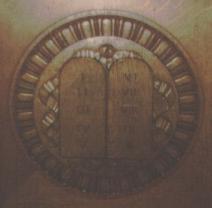
In essence, this email purported to represent that the United States is a nation founded and built on the principles of the Christian (not Catholic) faith.  The salient elements of the email are:

The steps to the Supreme Court, and the doors to the main courtroom of the Supreme Court building have Moses and the Ten Commandments emblazoned on them; inside the courtroom, Moses overlooks the bench at which the Justices of the Supreme Court sit; there are bible verses all over government buildings in Washington (but, no detail about which buildings and which verses,)  a “quote” from James Madison that this country was founded on the principles of the Ten Commandments, that Patrick Henry stated that these United States were founded on the Gospel of Jesus Christ, that fifty-two of the fifty-five “founders” (which is a typo; they are called “framers,”) of the Constitution were “members of established orthodox churches,” that Thomas Jefferson was afraid that the courts would begin making law instead of interpreting law, that the first Supreme Court Justice John Jay said that “Americans should select and prefer Christians as their rules”

The point of this email is that the United States is a nation founded on Christian (not to say Catholic) principles, and that any effort to turn away from those principles is to turn against the United States itself.  With a little dig on activist judges thrown in.  The entire email was presented with “agree or delete” as the subject line, as if one was to state that one is a patriot or anti-American based on the content of the email.

I just love emails that have some negative hook in them; I normally hit “reply all,” and send back a torrent of facts and history that utterly disproves such nonsense, except in the cases of some “angel” coming to visit me in an email that will pester me with bad luck and even more hair in my ears if I don’t IMMEDIATELY send it to the next 643 people in my address book WITHIN THE NEXT TWO MINUTES.

I digress.  And, I am made crazy by people who choose not to think.

With respect to the inclusion of Moses and the Ten Commandments on the Supreme Court building of the United States, and with deep appreciation for snopes.com:

  1. The United States Capitol does not house the Supreme Court of the United States. The Supreme Court has met in its own building since 1935.

  2. The Supreme Court building was constructed in 1932 through 1935; more than 151 years after the “founders” (sorry, I just couldn’t help myself) of the Consititution wrote that learned document.  http://www.cr.nps.gov/nr/travel/wash/dc78.htm

  3. Thinking that the predecessor building may have also contained such religious icons lionizing Moses and the Commandments?  Think again:  Since no provision had been made for a Supreme Court building, Congress lent the Court space in the new Capitol building. The Court convened for a short period in a private home after the British had used Supreme Court documents to set fire to the Capitol during the War of 1812. Following this episode, the Court returned to the Capitol and met from 1819 to 1860 in a chamber that has been restored as the Old Supreme Court Chamber. Then from 1860 to 1935, the Court sat in what is now known as the Old Senate Chamber.

  4. Capping the entrance is the pediment filled with a sculpture group by Robert Aitken, representing Liberty Enthroned Guarded by Order and Authority.  NOT Moses.

  5. Cast in bronze, the west entrance doors sculpted by John Donnelly, Jr., depict historic scenes in the development of the law.  NOT Moses.

  6. The doors of the Supreme Court courtroom don't literally have the "Ten Commandments engraved on each lower portion" — the lower portions of the two doors are engraved with a symbolic depiction, two tablets bearing only the Roman numerals I through V and VI through X. As discussed in the next item, these symbols can represent something other than the Ten Commandments.
The friezes which adorn the north and south walls of the courtroom in the Supreme Court building (also designed by Adolph Weinman) depict a procession of 18 great lawgivers: Menes, Hammurabi, Moses, Solomon, Lycurgus, Solon, Draco, Confucius and Octavian (south wall); Justinian, Mohammed, Charlemagne, King John, Louis IX, Hugo Grotius, Sir William Blackstone, John Marshall and Napoleon (north wall.)  According to the Office of the Curator of the Supreme Court of the United States, these figures were selected as a representation of secular law:
Weinman's training emphasized a correlation between the sculptural subject and the function of the building and, because of this, [architect Cass] Gilbert relied on him to choose the subjects and figures that best reflected the function of the Supreme Court building. Faithful to classical sources, Weinman designed for the Courtroom friezes a procession of "great lawgivers of history," from many civilizations, to portray the development of secular law.
  1. Note that Moses is not given any special emphasis in this depiction: his figure is not larger than the others, nor does it appear in a dominant position. Also, the writing on the tablet carried by Moses in this frieze includes portions of commandments 6 through 10 (in Hebrew), specifically chosen because they are not inherently religious. (Commandments 6 through 10 proscribe murder, adultery, theft, perjury, and covetousness.)

  2. The wall "right above where the Supreme Court judges sit" is the east wall, on which is displayed a frieze designed by sculptor Adolph A. Weinman. The frieze features two male figures who represent the Majesty of Law and the Power of Government, flanked on the left side by a group of figures representing Wisdom, and on the right side by a group of figures representing Justice.  According to Weinman, the designer of this frieze, the tablet visible between the two central male figures, engraved with the Roman numerals I through X, represents not the Ten Commandments but the first ten amendments to the U.S. Constitution, collectively known as the Bill of Rights.

Thus, Moses’ appearance in the structure of the building is part of a THEME of great lawgivers, which includes CHINESE people, and GREEK people.  This entire line of reasoning fails utterly.

Next point - James Madison, the fourth president, known as "The Father of Our Constitution" made the following statement "We have staked the whole of all our political institutions upon the capacity of mankind for self-government, upon the capacity of each and all of us to govern ourselves, to control ourselves, to sustain ourselves according to the Ten Commandments of God."
  1. Actually, this statement appears nowhere in the writings or recorded utterances of James Madison and is completely contradictory to his character as a strong proponent of the separation of church and state.
Next point - Patrick Henry, that patriot and Founding Father of our country said, "It cannot be emphasized too strongly or too often that this great nation was founded not by religionists but by Christians . . . not on religions but on the Gospel of Jesus Christ".
  1. Another spurious quotation. These words appear nowhere in the writings or recorded utterances of Patrick Henry.
Next point - Every session of Congress begins with a prayer by a paid preacher . . . whose salary has been paid by the taxpayer since 1777.
  1. Congress has indeed retained paid (Christian) chaplains since 1789 (not 1777) to open sessions with prayer and to provide spiritual guidance to members and their staffs upon request. This practice was strongly opposed by James Madison at its inception.

  2. The constitutional propriety of Congressional chaplains has been challenged in an August 2002 lawsuit filed in federal district court by Michael A. Newdow (the California man who won a federal appellate court decision against the use of the phrase "under God" in public school-led recitations of the Pledge of Allegiance). The case is still pending.
Next point - Fifty-two of the 55 founders of the Constitution were members of the established orthodox churches in the colonies.
  1. The diverse beliefs and religiosity of America's founding fathers is a complex subject, one which cannot be so neatly encapsulated by an (inadequately substantiated) statement such as the one quoted above. (See, for example, this critique of the above-quoted statement and similar material.)
Next point - Thomas Jefferson worried about that the Courts would overstep their authority and instead of interpreting the law would begin making law...an oligarchy...the rule of few over many...
  1. Yes, Thomas Jefferson was concerned about courts overstepping their authority and making (rather than interpreting) law, as was James Madison, who said: "As the courts are generally the last in making the decision, it results to them, by refusing or not refusing to execute a law, to stamp it with its final character. This makes the Judiciary department paramount in fact to the Legislature, which was never intended, and can never be proper." However, this issue really has nothing to do with the subject at hand (the endorsement of Judeo-Christian tradition by the federal government), other than in the tangential sense that some people feel one of the areas in which U.S. courts have overstepped their bounds is the body of decisions prohibiting the use or display of religious symbols and references in state-operated institutions.
Next point - The very first Supreme Court Justice, John Jay, said, "Americans should select and prefer Christians as their rulers."
  1. John Jay, one of the framers of the Constitution, was appointed by George Washington in 1789 to be the first Chief Justice of the Supreme Court of the United States (and later served two terms as governor of New York). He wrote, in a private letter (1797) to clergyman Jedidiah Morse:
“Providence has given to our people the choice of their rulers, and it is the duty, as well as the privilege and interest of our Christian nation to select and prefer Christians for their rulers. It is to be regretted, but so I believe the fact to be, that except the Bible there is not a true history in the world. Whatever may be the virtue, discernment, and industry of the writers, I am persuaded that truth and error (though in different degrees) will imperceptibly become and remain mixed and blended until they shall be separated forever by the great and last refining fire.”
So, we get to the dead LAST assertion of this long email of made-up nonsense before we get to a single point that has a shred of validity.  Not that it’s true, nor that it supports the argument advanced, just that it has a modicum of truth to it.  It’s just taken out of context.  And people say that the liberal “bias” media is a new thing.

While we’re here, let’s take up a few more favorites in the “hit parade” that is the lunacy asserting assailment against God and Christianity in this country.

The pledge of allegiance contains the phrase “under God,” which was a late add-on to a school statement written in celebration of the 400th of the discovery of America by Columbus.  On Flag Day June 14, 1954, the words “under God” were added.  This to assuage the McCarthyists, who were running rampant over our nation’s Bill of Rights.  Read the original words of the pledge, and its three recorded changes here:

http://www.flagday.org/Pages/StoryofPledge.html

How about “In God We Trust” on our coin and currency?  From the US Mint’s website:

From Treasury Department records it appears that the first suggestion that God be recognized on U.S. coinage can be traced to a letter addressed to the Secretary of Treasury from a minister in 1861.  An Act of Congress, approved on April 11, 1864, authorized the coinage of two-cent coins upon which the motto first appeared.
The motto was omitted from the new gold coins issued in 1907, causing a storm of public criticism.  As a result, legislation passed in May 1908 made "In God We Trust" mandatory on all coins on which it had previously appeared.
Legislation approved July 11, 1955, made the appearance of "In God We Trust" mandatory on all coins and paper currency of the United States.  By Act of July 30, 1956, "In God We Trust" became the national motto of the United States.
Several years ago, the appearance of "In God We Trust" on our money was challenged in the federal courts.  The challenge was rejected by the lower federal courts, and the Supreme Court of the United States declined to review the case.
Thus, it’s only been since (gasps) the MCCARTHY time that “In God We Trust” appeared on currency, and on coins the face of which had not been previously marred by a violation of the establishment clause.  One Hundred Seventy-One years of observance of the United States Constitution, followed by Fifty-One years of its violation in response to an unfounded scare tactic deployed by an otherwise irrelevant and unaccomplished bully who never once proved that a single Communist occupied a position of authority or power in Washington.  Can you say “Al-Qaeda?”

There is no mention of God or Jesus Christ in the United States Constitution.  There is but one mention of “God” in the Declaration of Independence.  The Founding Fathers were quite openly Deists, not traditional Christians.  The United States was founded on principles that were intended and designed to prevent the religious persecutions that had been so recently experienced in England and France.  The whole line of reasoning is utter nonsense (I felt like using a much stronger word here, but knowing that a lot of people are going to read this caused me to temper my typing.)

Now, I’m going to REALLY spin you.

These Ten Commandments – how confident are you IN them?  The Bible itself, and the various VERSIONS of the bible are inconsistent with what the Commandments are, and in which order they appear.  If they were the word of God, then, shouldn’t we be using the word of God delivered to his Servant closest in time to the actual telling?  Not the modified versions presented by the later interpreters of God’s word?  What if what we think of as the Ten Commandments aren’t really the Ten Commandments at all?

Which Ten Commandments?
Positive Atheism Magazine www.PositiveAtheism.org


The Second Tables
of Stone (Ex. 34)
(“the words that were on the first”)
1. Thou shalt worship no other god (For the Lord is a jealous god).
2. Thou shalt make thee no
molten gods.
3. The feast of unleavened
bread shalt thou keep in the
month when the ear is on the
corn.
4. All the first-born are mine.
5. Six days shalt thou work,
but on the seventh thou shalt
rest.
6. Thou shalt observe the feast of weeks, even of the first fruits of the wheat harvest, and the feast of ingathering at the year’s end.
7. Thou shalt not offer the
blood of my sacrifice with
leavened bread.
8. The fat of my feast shall not remain all night until the
morning.
9. The first of the first fruits of thy ground thou shalt bring
unto the house of the Lord thy God.
10. Thou shalt not seethe a kid in its mother’s milk.
K. Budde, History of Ancient Hebrew Literature


The First Tables
of Stone (Ex. 20)
(later smashed by Moses)
1. I am the Lord your God,
who brought you out of the
land of Egypt, out of the house of bondage. You shall have no other gods before me.
2. You shall not make for
yourself a graven image. You
shall not bow down to them or serve them.
3. You shall not take the name of the Lord your God in vain.
4. Remember the sabbath day, to keep it holy.
5. Honor your father and your
mother.
6. You shall not kill.
7. You shall not commit
adultery.
8. You shall not steal.
9. You shall not bear false
witness against your neighbor.
10. You shall not covet.
Adapted from Microsoft Bookshelf 98


Ten Punishments
1. He that sacrificeth
unto any god, save unto the
Lord only, he shall be utterly
destroyed.
2. And he that blasphemeth
the name of the Lord,
he shall surely be put to death.
3. Whosoever doeth
any work in the Sabbath day,
he shall surely be put to death.
4. He that smiteth his
father, or his mother, shall be
surely put to death.
5. He that curseth his
father or his mother, shall surely be put to death.
6. Whosoever lieth
with a beast shall surely be put to death.
7. If a man lie with
mankind, as he lieth with a woman, both of them have committed an abomination: they shall surely be put to death.
8. And the man that
committeth adultery with another man’s wife, the adulterer and the adulteress shall be put to death.
9. He that believeth
not, shall be damned.
10. And now, O ye
priests, this commandment is
for you. If you will not hear,
and if ye will not lay it to heart to give glory to my name,...behold, I will corrupt your seed, and spread dung upon your faces.
Jyoti Shankar, Bubbles Online Magazine


So, which is it?  None of these look too familiar – especially since none of them represent the Bill of Rights as it’s honored in our Supreme Court building.  (sorry, I just couldn’t HELP myself.)

Let’s talk for a moment about the Founding Fathers.

The United States of America should have a foundation free from the influence of clergy."-George Washington
"The founders of our nation were nearly all Infidels."-The Rev. Bird Wilson, an Episcopal minister and historian (lamented in an 1831 sermon)
So, if Rev. Bird Wilson, so close in time to our Founding Fathers, spoke of them as Infidels (meaning, that they were without God,) how can we NOW be parroting their virtue as good Christians, who intended that we all of us pray in schools, at government meetings and be good little believers in the Ten Commandments?  It’s inconsistent.

Following are a number of quotes from the most famous “Founders” of our Constitution

(I just can’t help myself – if someone’s going to get all worked up and write this crap, can they at least use the correct terminology?)  

Read ‘em and weep, Commandment Slaves –

George Washington
George Washington to Tench Tilghman, (March 24, 1784):"I am a good deal in want of a House Joiner and Bricklayer, (who really understand their profession) and you would do me a favor by purchasing one of each, for me. I would not confine you to Palatines. If they are good workmen, they may be of Asia, Africa, or Europe. They may be Mahometans, Jews or Christian of an Sect, or they may be Atheists."
John Adams
From a letter to Charles Cushing (October 19, 1756):“Twenty times in the course of my late reading, have I been upon the point of breaking out, ‘this would be the best of all possible worlds, if there were no religion in it.’”
A Defense of the Constitutions of Government of the United States of America, 1787–88:“The United States of America have exhibited, perhaps, the first example of governments erected on the simple principles of nature; and if men are now sufficiently enlightened to disabuse themselves of artifice, imposture, hypocrisy, and superstition, they will consider this event as an era in their history. … It will never be pretended that any persons employed in that service [forming the U.S. government] had interviews with the gods, or were in any degree under the influence of Heaven, more than those at work upon ships or houses, or laboring in merchandise or agriculture; it will forever be acknowledged that these governments were contrived merely by the use of reason and the senses. …Thirteen governments [of the original states] thus founded on the natural authority of the people alone, without a pretence of miracle or mystery… are a great point gained in favor of the rights of mankind”
Treaty of Tripoli, Article 11: Written during the Administration of George Washington and signed into law by John Adams. 
“The government of the United States is not in any sense founded on the Christian religion.”
John Adams, letter to Thomas Jefferson, (July 16, 1814):"Cabalistic Christianity, which is Catholic Christianity, and which has prevailed for 1,500 years, has received a mortal wound, of which the monster must finally die. Yet so strong is his constitution, that he may endure for centuries before he expires."
Thomas Jefferson
Letter to his nephew, Peter Carr, August 10, 1787"Shake off all the fears of servile prejudices, under which weak minds are servilely crouched. Fix reason firmly in her seat, and call on her tribunal for every fact, every opinion. Question with boldness even the existence of a God; because, if there be one, he must more approve of the homage of reason than that of blindfolded fear."
Thomas Jefferson to Jeremiah Moore, August 14, 1800"The clergy, by getting themselves established by law, & ingrafted into the machine of government, have been a very formidable engine against the civil and religious rights of man. They are still so in many countries & even in some of these United States. Even in 1783, we doubted the stability of our recent measures for reducing them to the footing of other useful callings. It now appears that our means were effectual."
Letter to Dr. Benjamin Rush, September 23, 1800“[The clergy] believe that any portion of power confided to me, will be exerted in opposition to their schemes. And they believe rightly: for I have sworn upon the altar of God, eternal hostility against every form of tyranny over the mind of man”
Thomas Jefferson, March 4, 1801, First Inaugural Address"And let us reflect that, having banished from our land that religious intolerance under which mankind so long bled and suffered, we have yet gained little if we countenance a political intolerance as despotic, as wicked, and capable of as bitter and bloody persecutions."
Thomas Jefferson, letter to Edward Dowse, April 19, 1803"I will never, by any word or act, bow to the shrine of intolerance, or admit a right of inquiry into the religious opinions of others."
Thomas Jefferson to Samuel Kercheval, January 19, 1810"But a short time elapsed after the death of the great reformer of the Jewish religion, before his principles were departed from by those who professed to be his special servants, and perverted into an engine for enslaving mankind, and aggrandizing their oppressors in Church and State."
Letter to Alexander von Humboldt, December 6, 1813"History I believe furnishes no example of a priest-ridden people maintaining a free civil government. This marks the lowest grade of ignorance, of which their political as well as religious leaders will always avail themselves for their own purpose."
Letter to Horatio G. Spafford, March 17, 1814“In every country and in every age, the priest has been hostile to liberty. He is always in alliance with the despot, abetting his abuses in return for protection to his own”
Thomas Jefferson to Horatio G. Spafford, January 10, 1816"You judge truly that I am not afraid of the priests. They have tried upon me all their various batteries, of pious whining, hypocritical canting, lying & slandering, without being able to give me one moment of pain. I have contemplated their order from the Magi of the East to the Saints of the West, and I have found no difference of character, but of more or less caution, in proportion to their information or ignorance of those on whom their interested duperies were to be plaid off. Their sway in New England is indeed formidable. No mind beyond mediocrity dares there to develope itself. If it does, they excite against it the public opinion which they command, & by little, but incessant and teasing persecutions, drive it from among them. Their present emigrations to the Western country are real flights from persecution, religious & political, but the abandonment of the country by those who wish to enjoy freedom of opinion leaves the despotism over the residue more intense, more oppressive. They are now looking to the flesh pots of the South and aiming at foothold there by their missionary teachers. They have lately come forward boldly with their plan to establish " a qualified religious instructor over every thousand souls in the US." And they seem to consider none as qualified but their own sect."
Thomas Jefferson to John Adams, May 5, 1817"I had believed that [Connecticut was] the last retreat of monkish darkness, bigotry, and abhorrence of those advances of the mind which had carried the other States a century ahead of them. ... I join you, therefore, in sincere congratulations that this den of the priesthood is at length broken up, and that a Protestant Popedom is no longer to disgrace the American history and character. If by religion we are to understand sectarian dogmas, in which no two of them agree, then your exclamation on that hypothesis is just, 'that this would be the best of all possible worlds, if there were no religion in it.'
Letter to John Adams, April 11, 1823"One day the dawn of reason and freedom of thought in the United States will tear down the artificial scaffolding of Christianity. And the day will come when the mystical generation of Jesus, by the Supreme Being as His father, in the womb of a virgin will be classed with the fable of the generation of Minerva in the brain of Jupiter."
Jefferson's Autobiography“[A]n amendment was proposed by inserting ‘Jesus Christ,’ so that [the preamble] should read ‘A departure from the plan of Jesus Christ, the holy author of our religion’; the insertion was rejected by a great majority, in proof that they meant to comprehend, within the mantle of its protection, the Jew and the Gentile, the Christian and Mohammedan, the Hindoo and Infidel of every denomination”
James Madison
Letter to William Bradford, April 1, 1774:"Religious bondage shackles and debilitates the mind and unfits it for every noble enterprise"
Memorial and Remonstrance Against Religious Assessments, Section 7, 1785:“During almost fifteen centuries has the legal establishment of Christianity been on trial. What have been its fruits? More or less, in all places, pride and indolence in the clergy; ignorance and servility in laity; in both, superstition, bigotry, and persecution.”
Ibid, Section 8:“What influence in fact have ecclesiastical establishments had on Civil Society? In some instances they have been seen to erect a spiritual tyranny on the ruins of the Civil authority; in many instances they have been seen upholding the thrones of political tyranny: in no instance have they been seen as the guardians of the liberties of the people. Rulers who wished to subvert the public liberty, may have found an established Clergy convenient auxiliaries”
James Madison, introducing the Bill of Rights at the First Federal Congress, Congressional Register, June 8, 1789:"[The] civil rights of none shall be abridged on account of religious belief or worship, nor shall any national religion be established, nor shall the full and equal rights of conscience be in any manner or on any pretext infringed."
James Madison, Detached Memoranda, believed to have been written circa 1817."The establishment of the chaplainship to Congress is a palpable violation of equal rights, as well as of Constitutional principles: The tenets of the chaplains elected [by the majority] shut the door of worship against the members whose creeds and consciences forbid a participation in that of the majority. To say nothing of other sects, this is the case with that of Roman Catholics and Quakers who have always had members in one or both of the Legislative branches. Could a Catholic clergyman ever hope to be appointed a Chaplain? To say that his religious principles are obnoxious or that his sect is small, is to lift the evil at once and exhibit in its naked deformity the doctrine that religious truth is to be tested by numbers. or that the major sects have a right to govern the minor."
James Madison, letter to Robert Walsh, March 2, 1819"The Civil Government, though bereft of everything like an associated hierarchy, possesses the requisite stability and performs its functions with complete success, whilst the number, the industry, and the morality of the priesthood, and the devotion of the people have been manifestly increased by the total separation of the Church from the State."
James Madison, letter to Edward Livingston, July 10, 1822:"I observe with particular pleasure the view you have taken of the immunity of Religion from civil jurisdiction, in every case where it does not trespass on private rights or the public peace. This has always been a favorite principle with me; and it was not with my approbation, that the deviation from it took place in Cong[ress], when they appointed Chaplains, to be paid from the Nat[ional] Treasury. It would have been a much better proof to their Constituents of their pious feeling if the members had contributed for the purpose, a pittance from their own pockets. As the precedent is not likely to be rescinded, the best that can now be done, may be to apply to the Const[itution] the maxim of the law, de minimis non curat." 
Benjamin Franklin
From Franklin’s autobiography:“Scarcely was I arrived at fifteen years of age, when, after having doubted in turn of different tenets, according as I found them combated in the different books that I read, I began to doubt of Revelation itself ”
“...Some books against Deism fell into my hands....It happened that they wrought an effect on me quite contrary to what was intended by them; for the arguments of the Deists, which were quote to be refuted, appeared to me much stronger than the refutations, in short, I soon became a thorough Deist.”
Benjamin Franklin, The Writings of Benjamin Franklin: London, 1757 - 1775"If we look back into history for the character of present sects in Christianity, we shall find few that have not in their turns been persecutors, and complainers of persecution. The primitive Christians thought persecution extremely wrong in the Pagans, but practised it on one another. The first Protestants of the Church of England, blamed persecution in the Roman church, but practised it against the Puritans: these found it wrong in the Bishops, but fell into the same practice themselves both here and in New England."
Ethan Allen
From Religion of the American Enlightenment:“Denominated a Deist, the reality of which I have never disputed, being conscious that I am no Christian.”
From "Reason: The Only Oracle of Man""Though 'none by searching can find out God, or the Almighty to perfection,' yet I am persuaded, that if mankind would dare to exercise their reason as freely on those divine topics as they do in the common concerns of life, they would, in a great measure, rid themselves of their blindness and superstition, gain more exalted ideas of God and their obligations to him and one another, and be proportionally delighted and blessed with the views of his moral government, make better members of society, and acquire, manly powerful incentives to the practice of morality, which is the last and greatest perfection that human nature is capable of."
Thomas Paine
Excerpts from The Age of Reason:
"My own mind is my own church.  All national institutions of churches, whether Jewish, Christian or Turkish, appear to me no other than human inventions, set up to terrify and enslave mankind, and monopolize power and profit."
"Whenever we read the obscene stores (of the Bible), the voluptuous debaucheries, the cruel and torturous executions, the unrelenting vindictiveness with which more than half the Bible is filled, it would be more consistent that we call it the word of a demon than the Word of God." 
"...when I see throughout the greater part of this book (the Bible) scarcely anything but a history of the grossest vices and a collection of the most paltry and contemptible tales, I cannot dishonor my Creator by calling it by His name." 
"(The Christian) despises the choicest gift of God to man, the Gift of Reason; and having endeavored to force upon himself the belief of a system against which reason revolts, he ungratefully calls if 'human reason' as if man could give reason to himself."
“Of all the systems of religion that ever were invented, there is no more derogatory to the Almighty, more unedifying to man, more repugnant to reason, and more contradictory in itself than this thing called Christianity”
Thomas Paine, Answers to Friends regarding The Age of Reason, Paris, May 12, 1797
"As I have now given you my reasons for believing that the Bible is not the Word of God, that it is a falsehood, I have a right to ask you your reasons for believing the contrary; but I know you can give me none, except that you were educated to believe the Bible; and as the Turks give the same reason for believing the Koran, it is evident that education makes all the difference, and that reason and truth have nothing to do in the case.  You believe in the Bible from the accident of birth, and the Turks believe in the Koran from the same accident, and each calls the other infidel. But leaving the prejudice of education out of the case, the unprejudiced truth is, that all are infidels who believe falsely of God, whether they draw their creed from the Bible, or from the Koran, from the Old Testament, or from the New."
"It is often said in the Bible that God spake unto Moses, but how do you know that God spake unto Moses? Because, you will say, the Bible says so. The Koran says, that God spake unto Mahomet, do you believe that too? No.  Why not? Because, you will say, you do not believe it; and so because you do, and because you don't is all the reason you can give for believing or disbelieving except that you will say that Mahomet was an impostor. And how do you know Moses was not an impostor?"
If you’re read this far – I applaud your interest in expanding your knowledge.  And, I have a question for you:

If the Founding Fathers of our Country felt that Christianity was a dangerous thing that MUST be kept out of government, then, aren’t the “Strict Constructionist” judges like Scalia, Alito, and Thomas who are trying to force this crap down our throats the “Activist Judges” that Jefferson warned us about?

How can we have respect for Islam when we are too fearful to criticise it?

Muriel Gray on the fury over the Muhammed cartoons
(from the London Times)

One of the biggest misunderstandings of the crisis caused by the Danish newspaper Jyllands-Posten printing cartoons of Muhammed is that the paper was merely satirising Islam and hadn’t realised that any image of the prophet, insulting or respectful, is utterly taboo to Muslims. This is quite wrong.

The incident arose from the fact that an author of a children’s book about the life of Muhammed wanted it illustrated but couldn’t find any artist brave enough to risk offending those who currently express their offence by murdering the offender. Hence in a deliberate test of freedom of speech, the newspaper, not Muslim and therefore not bound by this taboo, sought artists willing to draw Muhammed. The mild satire on the state of Islamic jihad was incidental.

So yes, it was a deliberate provocation, a massive shove in the playground, but they didn’t start the fight. The initial provocation came from Ayatollah Khomeini in 1989 when he pronounced a death sentence on the author Salman Rushdie for having a written a novel that contained another Islamic taboo, that of disrespecting the Koran. This was a stroke of genius. Whereas critics of repugnant ideologies were only in peril when they acted openly in the country guilty of the tyranny, and were free to express their disgust from the safety of a civilised country, Khomeini came up with the brilliant Mafia-like scheme of recruiting his foot soldiers everywhere.

Knowing that there are now Muslims in almost every country in the world, he removed that safety net once offered to people such as critics of the USSR or Idi Amin, so that even in safe, tolerant Britain, nobody would ever again dare write, paint, broadcast, film or lecture on anti-Islamic views for fear of their lives. Of course most Muslims, being sane, peaceful human beings, simply ignored the psychotic Khomeini. But tragically the subsequent brutal murder of Theo Van Gogh, the deadly riots sparked by journalist Isioma Daniel’s article about Miss World in Nigeria, and the threats to people like author Irshadi Manji for writing a witty book about reforming Islam, have had such an effect that they have bought Islam immunity from criticism, not through respect, but through fear.

This was what Jyllands-Posten was testing, and the result, as we can see, is that it has proved its point spectacularly. The other European papers which published the cartoons were, with a couple of exceptions, not trying to further provoke Muslims, but were engaging in an “I am Spartacus” moment, showing solidarity for Denmark and trying to gain enough similar support throughout Europe that it would make it harder for the extremists. What if everyone publishes? Going to kill everyone? Going to boycott goods from every European country? If only the Czech Republic would publish the cartoons then Hamas would have to boycott Semtex.

This may seem a storm in a teacup, but it is in fact a profoundly serious moment in our history. Fundamentalism, utterly at odds with the Western values so vigorously and courageously fought for over two bloody world wars, has successfully undermined the very linchpin of our freedom. Our culture falls way short of being perfect, but it is a work in progress. We are our own self-critics, the majority of us just as appalled by the trademarks of Western excesses like pornography, yob culture and rampant, wasteful consumerism as any mullah would be.

But when the Twin Tower murderers spent their last night alive experiencing Western culture, did they go to The Guggenheim? Did they see an Arthur Miller play, listen to a recital of Mozart’s Requiem, take in a showing of a Hitchcock film or even drive a Ferrari? No. They went to a lap-dancing bar. So when hardline Islamists shout that we don’t understand their culture, the greater truth is that they clearly don’t understand ours. For instance, how, as a feminist, can I explain to an extremist that while the sight of 12-year-old girl with a thong cutting her half-exposed bare bottom in two is offensive to me, so too is the sight of a woman in a burka.

But what of moderate Islam? British Muslims are represented by the unelected Sir Iqbal Sacranie, a man at the forefront of the book-burning mob who threatened Rushdie’s life, when Sacranie declared: “Death, I think, is too easy for him.” For this part in incitement to murder, Sacranie was awarded not the stiff custodial sentence one might expect, but a knighthood. Now this hypocrite says that he “believes in freedom of speech”, although he was complicit in attempting to destroy it, and we must all “respect other people’s beliefs”. If that is so, then logically we must respect the beliefs of Nick Griffin and the BNP. But we do not. We despise them. What we respect is Griffin’s right to be despicable. Hardline Islamists want us to lose the right to criticise all that is contemptible about their beliefs, without understanding how hard we are all working to allow them that exact same freedom.
This paper’s belief in freedom of speech is paramount. The decision not to reprint the cartoons, not to declare ourselves another Spartacus in support of our European colleagues, was taken, at least partly, out of consideration for the safety of the staff, and the safety of Scottish people here and abroad, and I fully support it. But the extremists, who created the fear that made that decision a foregone conclusion, must understand that if they think the UK press have done this out of respect, they are so very wrong. They have undoubtedly won this battle hands down. Well done. We are afraid. But do they think people neutered and silenced by fear are going to work at embracing their culture, their religion or their values? Clearly, they don’t care. The danger of this backlashing on to our innocent Muslim fellow citizens is a distinct possibility and the thought makes me sick to the stomach. It looks as though those of us aching for the misery of all this hatred to end are in for a long wait.


05 February 2006

Saturday, February 04, 2006

So, what's up with that?

Nick got his 1099s yesterday - and went ballistic. I thought it was funny. He blew up my phone for hours, and then sent me text messages telling me that he figured I was afraid of him (fat chance,) that he insisted that I talk to him - which I decided to assign the same priority that he's always given me - and THEN, he called me a fat F(*#^. Oh, boo hoo.

Spent the afternoon yesterday with James from Denver, who was overnighting. We had some fun hanging out, but there was just no chemistry. Which is fine; one can't assume that there will be. Talked about the charter airline that he works for - seems that they have an aircraft or two that would be ideal for Fabulair's use.

While out, I had to make a stop at the bank, and opened up the Fabulair bank accounts. That was a rewarding experience. Next week, I'm opening another account for my consulting business. Also, looked at becoming a regiatered QuickBooks consultant. Just the software discount is worthwhile.

Went to the car show last night, and was just shocked at how awful the quality of US cars seems to be. The Acura RL is the most exquisite and reachable car on the market. VW is now VERY plasticy in the manner of GM cars with their new Jetta and Passat.

Then, I spent a bunch of time last night researching the costs of ownership for the Acrua RL, the Infiniti M35 and (my favorite choice) a used Phaeton. Found a lease assumption on a Phaeton - my cost would be a DOLLAR A MILE with insurance and gasoline. Amazing. Ruby's driver's door is now not working correctly, which is an annoyance, but .. when I add up the costs of keeping her and driving that .. it's a hands-down deal.

And I still want the Phaeton..

Started contemplating ways to generate more income from my consulting website today and yesterday. I think I can do it, but I need some help from some people with better web skills than I have.

Have church tomorrow morning, of course, and then more client work.

I had something relatively profound to talk about, but it's gone.

Friday, February 03, 2006

Friday's the last day of the week, isn't it?

What a day I have lined up - hanging out with James from Denver, and trying to haul in the cabbage.

Going to the auto show tonight - that should be fun.

Thursday, February 02, 2006

For an amusing time

source file

Olbermann smacks back at O'Reilly - MSNBC anchor lambasts O'Reilly - it's VERY funny.
"Earlier tonight, President Bush delivered his State of the Union address. The president gave the speech at 9 p.m., which means he had to wear his pajamas under his suit."
---Conan O'Brien

It just keeps getting funnier

Administration: Nevermind what Bush said yesterday

By kos on George W. Bush

Why are we supposed to believe anything Bush said yesterday when his own administration claims it was all bullshit?

Administration backs off Bush's vow to reduce Mideast oil imports
By Kevin G. Hall
Knight Ridder Newspapers

WASHINGTON - One day after President Bush vowed to reduce America's dependence on Middle East oil by cutting imports from there 75 percent by 2025, his energy secretary and national economic adviser said Wednesday that the president didn't mean it literally.

Maybe the White House press corps can ask Scotty which parts of the speech Bush meant literally, and which parts were, um, not literal.

Deju vu - Nixon and the White House tapes ver. 2.01

source article

Fitzgerald Reveals Someone's Been Tampering With Evidence?
by georgia10
Wed Feb 01, 2006 at 07:17:28 PM PDT

It's only February 1st, but Attorney General Alberto Gonzales is already having a bad month. First, he has Feingold breathing down his neck about his apparent perjury at his confirmation hearing. Then, Senator Leahy sends him a letter challenging him to explain why the Patriot Act should be reauthorized if the President claims he already has the authority to act unilaterally in the War on Terrorism. Then, Google still refuses to hand over Americans' porn data. And just when poor Alberto thought it couldn't get any worse, Patrick Fitzgerald resurfaces with a startling revelation: someone's been having fun with the delete button at the White House.

Scooter Libby's attorney has requested access to basically all of Fitzgerald's evidence. Mind you, this is an obstruction of justice charge. Yet Libby wants access to essentially all the transcripts and evidence so he can "prove" that he really did just forget about certain conversations. Well, in denying one of Libby's requests, Fitzgerald, in an oh-so-subtle manner, drops a bombshell:

"In an abundance of caution," he writes, "we advise you that we have learned that not all email of the Office of the Vice President and the Executive Office of the President for certain time periods in 2003 was preserved through the normal archiving process on the White House computer system."

How does Fitzgerald know of the existence of emails which have been deleted? Speculation leads us to conclude that either someone told him about the emails, or someone has copies of them. Notice Fitzgerald refers to multiple emails in both the Vice-President's and President's office. Were the emails communications between the two offices? It's also important to note that Fitzgerald states that no evidence "pertinent to the charges against the defendant" have been destroyed. This is a beautiful move by Fitzgerald, because remember, the charges against Libby are obstruction of justice and perjury.

So how does this make the sweat glisten on Gonzales' brow? We all know about the 12 hour gap, that twilight zone between the evening of September 23, 2003 (when Gonzales was informed of the order to preserve evidence) and September 24, 2003 (when Gonzales actually gave the order to retain evidence). But it's not just a 12 hour gap that provided a chance to tamper with the evidence. It's a two week gap. Recall that Gonzales and the rest of the White House lawyers screened every communication before handing it over to Fitzgerald. Democrats at the time cried foul:

Read their reaction on the flip...

* ::
*

"To allow the White House counsel to review records before the prosecutors would see them is just about unheard of in the way cases are always prosecuted," said Sen. Charles Schumer, D-N.Y., speaking on NBC's Today show. "And the possibility of mischief, or worse than mischief, is very, very large."

Administration officials said the White House counsel's office may need up to two weeks to organize documents that some 2,000 employees are required to submit by 5 p.m. Tuesday.

Gonzales testified about the Plame leak in June 2004. I guarantee Fitzgerald asked him about the destruction of evidence. How can I guarantee that? Well, remember that Fitzgerald wrote to then Acting Attorney General Comey to clarify the scope of his investigation. Comey replied to Fitzgerald as follows (PDF):

At your request, I am writing to clarify that my December 30, 2003, delegation to you of "all the authority of the Attorney General with respect to the Department's investigation into the alleged unauthorized disclosure of a CIA employee's identity" is plenary and includes the authority to investigate and prosecute violations of any federal criminal laws related to the underlying alleged unauthorized disclosure, as well as federal crimes committed in the course of, and with intent to interfere with, your investigation, such as perjury, obstruction of justice, destruction of evidence, and intimidation of witnesses...

I've always wondered why Fitzgerald requested the clarification. The request took place in early 2004. Around the same time, Fitzgerald subpoenaed the records of Air Force One. It is possible that Fitzgerald has known about the existence of deleted communications early on. Did Gonzales' explanation of why he waited 12 hours hold up at the grand jury? Does Fitzgerald indeed have proof that evidence was destroyed? If so, does Fitzgerald have evidence that the Department of Justice tipped the Administration to destroy that evidence?

Whatever the answers, this latest bombshell proves that the CIA leak scandal is still simmering--and administration officials are still squirming.

So, here's why things is the way they is ..

source article

Abramoff and gaming Indians: Just the tip of the iceberg [Updated]

For a couple of weeks now, I've been writing about what I've come to view as the much bigger scandal involving everyone from Jack Abramoff to Gale Norton to Richard Pombo to Grover Norquist, and generally every major Republican in between. It too has to do with Indians, but not only those with gaming operations. In fact, the real actors in this drama are the poorest of Indians, mostly in the West and Plains.

This morning, I tried to summarize the issues in a comment thread at MyDD. It was the first time since starting my research that I've tried to put the "story" down in as few words as possible. Because the fact is, unless people can actually grasp the basics of this scandal, and how it effects not just a few hundred thousand Indians, but everyone in this country, I think it will never make it past a few interested links on Technorati.

So below the jump is my best try to do just that.

* mbw's diary :: ::
*

The story of Jack Abramoff's buying of influence goes well beyond a few Congressional players. While those relationships are key to the story, they're secondary to his cosy relationship with CREA director Italia Federici, her former boss, Sec. of the Interior, Gale Norton, and Deputy Sec. Steven Griles, and this seedy gang's take-over of the Bureau of Indian Affairs (BIA). This move, however, was not just to help a few gaming tribes expand their operations - remember, Abramoff dismissed his tribal clients as morons. He was using their money to screw not only tribes in direct competition for part of the gaming pie, but, probably unwittingly, to subvert justice for nearly half the Indians in the country.

The front-burner issue in the Interior Department during this Administration has been the foot-dragging, subverting and outright sabotaging of the largest class action case in US history, Cobell v. Norton. Norton was even slapped with a contempt charge by Judge Royce Lamberth for her part in the matter. Clinton Sec. Bruce Babbitt was also charged with contempt, but the plaintiffs in Cobell assert that while Clinton's people were just incompetent and trying to drag out the clock so they could hand off the problem, Norton has been downright hostile to settling the case, willing to use extreme measures to subvert the court ordered judgment.

Why? Colorado native Norton is of the James Watt school of pillage the environment (she entered the Reagan Administration to work for him) and her entire career has been to forward the interests of oil and gas, mining and forestry industries. And in the West, that means easy access to cheap federal land leases, hundreds of millions of acres of land rich with natural resources.

A large chunk of those federal lands are Indian Trust Fund lands, taken into trust in the late 1800s via the Dawes Act, and leased out to industries, ranchers and farmers at cut-rate prices. The money was then to be managed by Interior and paid out to native landowners. Of course, that didn't happen - hence Cobell v. Norton.

The courts have ordered a full accounting of the Trust. Problem is, many of the documents were destroyed, including a slew of them under Norton. So the plaintiffs decided a few years back that the only way to get a real accounting is to audit the industries' books. That's what makes everyone so nervous, as plaintiff experts, having done some sampling, estimate we're talking over $150 billion in underpayments and fraud, along with interest, of course. Yes, $150 BILLION. And the pressure would be huge for Congress to force a repayment by the guilty. If not, then it comes out of the taxpayers' pockets, as the courts have already ordered the accounts be properly audited and brought up to date. Hence, the concern of the oil/gas, mining, ranching, forestry and agriculture interests which use/abuse the land lease process.

So Norton did what she could to subvert the case, but as the heat was turned up, and the Administration losing appeal after appeal, she started pushing for Congressional Republicans to take the case and force a settlement. A settlement for a fraction of the potential amount, but one which would prevent an audit of industry accounts. Who is the chief supporter of a Congressional settlement? None other than the puppet of the oil, gas and mining industry, Richard Pombo. Twice Pombo has written legislation ordering a settlement (both times with no settlement figures, of course), but Delay intervened. Not because he likes Indians, but because he figures that it's safer to stall than to provide even the smallest chance the industry books will be audited. (Delay and most oilmen Congressmen voted against the original Indian Trust Accountability Act back in 1994 - only 36 Reps did.) So from 2002 to 2005, Delay ordered, despite a court order, that no accounting of the trust fund occur (or at least there'd be no funding for it, which, of course, means it doesn't happen.)

This is where Abramoff comes in. He was the slush fund operator. Indians thought they were paying Pombo and others on House Resources and Senate Indian Affairs, et al., for help with gaming issues, and Abramoff was in fact padding coffers necessary to protect the industry from auditing.

Think this is all too far-fetched? Just last week, the NYTimes posted an article on three months' of research into federal land leases (including Indian trust lands) and found rampant fraud and underpayment. In addition, numerous whistleblowers were fired, including Norton and Griles trustee for the BIA, who refused to testify before Congress that the Trust was fine. Accountants and fund managers were fired for doing a good job and finding fraud.

McCain and Pombo are once again pushing for a settlement, and in the increasingly hostile environment for Indians due to success in portraying Abramoff's tribal clients as villains, not victims, they'll most likely get it, at rock-bottom prices. And the industry books will remain safely closed.

That's it in a nutshell. There are a lot of details I left off (Griles' oil/gas/mining lobbying history, the industry's financial support for CREA, which Abramoff used to launder tribal money for anti-environmental causes, the Western Shoshone case, now in front of the UN, payments to key House Resources members just prior to Trust votes, Pombo's bill to sell off the West, etc.) But as I said, if one doesn't understand the underlying motivation, that these industries, which give millions, overwhelmingly to Republicans, are potentially liable for over a hundred billion in fraudulent underpayments, then Abramoff is nothing more than a guy who wanted to pocket some money from stupid Indians, not the slush fund manager in a much bigger game.

Most of the background and links can be found in articles over at Wampum.

[Update:] In case you weren't convinced this isn't a hot button issue for the Bushies, this story just came up on Indianz.com:

Bush punishes BIA budget to pay for Cobell
Thursday, February 2, 2006

The Bush administration has made an across-the-board cut to the Bureau of Indian Affairs budget, blaming the reduction on the Cobell trust fund lawsuit.

In an unprecedented letter to tribal leaders, associate Interior deputy secretary Jim Cason announced a $3 million cut to the BIA budget. He said the administration failed to plan for attorney's fees awarded as part of the Cobell case even though the request for fees was pending for more than a year.

As a result, Cason said the BIA forked over $2 million from an account used to "reimburse tribal attorney's fees" and an additional $1 million came from an across-the-board rescission of tribal programs.


This will be more fodder for Congress to "fix Interior's mess and save the Indians", all the while saving their corporate bankrollers.

Thursday ..

Last night's New Vision board meeting went very well - longer than I had planned; I didn't get out of there until after 11:00 last night, which throws off my whole program for today. I have a ton of work to do that HAS to be done today, not the least of which is getting ready for tonight's class.

How about a quote from "Today's Papers," published by Slate Magazine - which reviews the major US newspapers each morning and prints a synopsis.

The New York Times and Washington Post all lead with the House barely passing $40 billion in cuts, mostly to student loans, crop subsidies, and Medicaid. The Senate passed the bill in December, so now it goes to the White House for the president's signature. The Los Angeles Times also leads with the cuts, but focuses on the roughly $2 billion in aid California is expected to lose. USA Today leads with U.S. plan to rehab Iraq's healthcare system running into serious snafus. One hundred eighty clinics were supposed to have been built by December 2005. Number actually finished so far: four. Number that have opened: zero. USAT doesn't mention it, but it appears the administration will not ask for any more Iraq reconstruction money.

The budget bill, which passed by only two votes and got no Democratic support, was pitched by Republican leaders as a key part of a big push to rein in the deficit. It wasn't. As the Post notes, "The impact of the bill on the deficit is likely to be negligible, slicing less than one-half of 1 percent from the estimated $14.3 trillion in federal spending over the next five years." That bit of reality comes well-past-the-fold. Instead, higher up we're treated to that ever-informative practice of dueling quotes, including this fine bit of flab from a Republican rep., "American taxpayers, and anyone concerned with the nation's long-term fiscal stability, have won a great victory today."

The NYT plays up the politics of the close vote, then plays dumb: "The vote helped President Bush deliver on his promise to rein in federal spending." The LAT isn't so slow. It notes that not only were the cuts themselves "mild," Congress is about to pump up the deficit a bit. As the House was voting on the budget tweaking, "the Senate was debating a $56-billion tax cut that the House had already passed." The net result of the two measures would "add $16 billion to federal deficits."


Aren't you proud to be a Republican NOW? How do you feel about fiscal responsibility in action?

"Yesterday at a press conference President Bush said he had not seen 'Brokeback Mountain.' However, he did express an interest in drilling for oil there"
---David Letterman


It's pretty clear to me that we at New Vision have found ourselves a new space to hang our hats. I'm very excited about that. While we've committed to staying where we are through June, I think we also have to be clear about the fact that where we are is very unstable, and they have four months to get it together. If they haven't gotten it together in the last seven months, why should we move forward thinking that they'll get it together now?

We have new people coming in who are very excited and involved, which is a great feeling. And, I was greatly acknowledged by Jesse last Thursday for making things happen down in Clear Lake.

Which reminds me of ALL of the homework I have to do today, and the prep work to be ready for the class on Tuesday night AND the service on Sunday.

My broker approached me about setting up a processing center for all of his offices and running it. I'm weighing the choices.

And, I'm chosing, starting today, to not do work for people who haven't paid. I have been nursing clients along who haven't been paying, or have paid partially, and are still needing new work but paying with excuses.

"President Bush is urging all nations to cut off aid to Hamas, including $234 million dollars we were going to send them. In fact, to make sure the money doesn't get there, he's putting FEMA in charge of it."
---Jay Leno
A comet is, of course, frozen bodies of ice and dust formed over 4.6 billion years ago---or created 6,000 years ago, depending on whether or not you're wrong."
---Jon Stewart

Wednesday, February 01, 2006

Those pesky "old laws..."

source article

From the GREAT STATE OF MAINE...


"The FISA law was written in 1978. We're having this discussion in 2006. It's a different world. ... I said, look, is it possible to conduct this program under the old law? And people said, it doesn't work in order to be able to do the job we expect us to do."

---President Bush on January 27, 2006

C&J agrees wholeheartedly. What this country needs is a good scrubbing behind the ears. It's time to jettison any law that's not laser-etched on 21st Century titanium. If it's over 10 years old, toss it. And we can start with these old laws, since they're just gumming up the works:

The right of the people to be secure in their persons, houses, papers, and effects, against unreasonable searches and seizures, shall not be violated, and no Warrants shall issue, but upon probable cause, supported by Oath or affirmation, and particularly describing the place to be searched, and the persons or things to be seized.

"Abracadabra! The fourth amendment was written in 1789. We're having this discussion in 2006. It's a different world."

The Senate of the United States shall be composed of two Senators from each State, elected by the people thereof, for six years; and each Senator shall have one vote. The electors in each State shall have the qualifications requisite for electors of the most numerous branch of the State legislatures.

"Shazam! The seventeenth amendment was written in 1912. We're having this discussion in 2006. It's a different world."

No person shall be elected to the office of the President more than twice, and no person who has held the office of President, or acted as President, for more than two years of a term to which some other person was elected President shall be elected to the office of President more than once.

"Bada-boom Bada-bing! The twenty second amendment was written in 1951. We're having this discussion in 2006. It's a different world."

Wheee, that was fun! Go ahead and try it. Pick an old law (any old law will do), say the magic words, and watch it---Zzzzzzzing!!!---disappear! And don't forget---there are probably a bunch of city and state laws that are pretty old, too. I said the magic words and now I can shake down old ladies on the street for gas money. Now if you'll excuse me, I'm gonna see what kind of "laws" govern open liquor containers---they must be gettin' pretty old by now too, right?

Cheers and Jeers starts in There's Moreville... [Swoosh!!] RIGHTNOW! [Gong!!]

Let's nuke Iran!!!

source article

Last Friday, I, along with Ron Glick, the co-host of our KDVS 90.3 FM program, Speaking in Tongues, had the opportunity to interview Jorge Hirsch, a physicist at the University of California, San Diego. He discusses the Iranian nuclear energy program, the frightening relaxation of American policy in regard to the first use of nuclear weapons and the prospect that a preemptive war against Iran could result in the use of such weapons by the United States, subjects that he has written about extensively at antiwar.com. A profoundly troubling interview, as war hysteria intensifies.

Go here to listen or download the archived program. It will be available through this Friday, February 3rd, 5pm, Pacific time.

Or, I downloaded it and you can check with me.

Human-animal hybrids?

source article

How many times can this guy give the same speech?

The call for an end to tyranny was straight from his second term inaugural address. The talking heads in the State of the Union postmortems seemed to be enchanted by Bush's distinction between the good war critics and the bad war critics; however, that whole line was boiler-plate from the nineteen thousand terrorists-rejectionists-and-Saddamists speeches he gave in the fall after his numbers dipped below forty. I guess the phrase "addiction to oil" was new, but then again two years ago -- I think it was two years ... it's all starting to blur together -- such sentiments led to an incredibly convincing call for hydrogen cars. Remember that? This year all we got were human-animal hybrids.

Truly a bold stand on that one, by the way. Who exactly is for human-animal hybrids? -- you know what, screw it: I, Joe of American Leftist, am hereby coming out in favor of human-animal hybrids... I think they're desperately important for the good of the human race. We need to focus our best and brightest on that age old goal of mankind: creating a sardonic talking monkey who smokes a pipe and sounds like James Mason.

Perhaps the bold new proposals that Bush didn't propose were of more interest than the rehashed tripe that he did. If you would have asked me three months ago to predict the centerpiece of this year's State of the Union I would have guessed that Bush was going to announce a phased withdrawal from Iraq -- which would have turned out not to be a withdrawal at all but would have coincidentally begun right around the 2006 elections. I bet Karl Rove would have made a similar prediction -- alas, the reality on the ground in Iraq has always had an anti-Bush bias.

UPDATE: The British are, apparently, pro-Human-animal hybrid ... my people, my people.

Tuesday, January 31, 2006

More Tuesday thoughts - it's SoU day!

Things that Remind Gore Vidal of his Favorite Roman Emperor

Waste Paper Basket has Gore Vidal's State of the Union Address. Here's an excerpt:


And now here we are planning new wars, ongoing wars in the Middle East. [...] This is what we call dictatorship. Dictatorship. Dictatorship. And it is time that we objected. [ ... ]

I think demonstrations across the country could be very useful on this famous Tuesday. Just say no. We've had enough of you. Go home to Crawford. We'll help you raise the money for a library, and you won't even ever have to read a book. We're not cruel. We just want to get rid of you and let you be an ex-president with his own library, which you can fill up with friends of yours who can neither read nor write, but they'll be well served and well paid, we hope, by corporate America, which will love you forever.

So I think it is really up to us to give some resonance to the State of the Union, which will be largely babble. He's not going really try to do anything about Social Security, we read in the papers. He has no major moves, other than going on and on about the legality of his illegal warrantless eavesdroppings and other breakings of the law.

I had a piece on the internet some of you may have seen a few days ago, and there's a story about Tiberius, who’s one of my favorite Roman emperors. He's had a very bad press, because the wrong people perhaps have written history. But when he became emperor, the Senate of Rome sent him congratulations with the comment, “Any law that you want us to pass, we shall do so automatically.” And he sent a message back. He said, “This is outrageous! Suppose I go mad. Suppose I don't know what I'm doing. Suppose I'm dead and somebody is pretending to be me. Never do that! Never accept something like preemptive war,” which luckily the Senate did not propose preemptive wars against places they didn't like. But Mr. Bush has done that.

Tuesday developments

I wonder why Donna sent this to me .. (ulp!)

Cellphone Rudeness
By Michael Masterson

I was waiting in line at my neighborhood bookstore when I became aware of a struggle going on behind me.

"I thought I told you to turn that thing off," snapped a woman in gray slacks. She was scolding her son, whose cellphone was ringing. I hadn't even noticed the sound - a sad testament to how cellphones have become woven into the tapestry of everyday life.

The kid - high school age, scuffed sneakers and baggy jeans - started fumbling around in his backpack, trying to find the offending item.

"Out!" his mother commanded. "Go wait in the car." She practically threw her keys at the boy, who slunk out the door.

To my surprise, the woman turned to me and apologized. "I don't mean to yell. I'm just so fed up with cellphones!"

The woman - who introduced herself as Beth - explained that she teaches math at a local community college. And, she told me, she is constantly reprimanding her students for paying more attention to their cellphones than to their work. "This morning," she said, "one student actually answered her phone to tell the caller that she was in the middle of her calculus test! And even if they turn off the ringers, they still text-message one another."

The blatant use of cellphones, anywhere and any time, has become commonly accepted behavior. Perhaps that's why Beth's students seem to be unaware of what they are doing. And while I've never personally experienced such an egregious display of rudeness, I have noticed that most people have few to no manners when it comes to their mobile phones.

It's the damnedest thing. You are having a conversation with someone, their cellphone starts ringing, and - without even excusing themselves - they open it up and start talking to someone else. You stand there, feeling like a fool ... and wait.

Cellphone calls routinely disrupt personal conversations, business conversations, meetings, speeches, ceremonies, and even religious services. The only attempts made to curtail this modern menace are in theaters and concert halls - as if entertainment were the only thing more important than instant communication.

In the old days, we followed an informal set of rules. The first rule was universal: Except in dire emergencies, ongoing conversations should not be interrupted. If you wanted to say something, you would wait your turn. There was also a rule that related to the intensity of the conversation: The more serious it was, the stricter the prohibitions against butting in. And, finally, there was an acknowledged hierarchy: Children deferred to adults, students to teachers, employees to their bosses, and so on.

Call it respect ... call it courtesy ... all that is out the window. Any conversation, regardless of how important, intimate, or urgent, is now brought to a screeching halt the moment someone's phone goes off.

Of course, I am something of a hypocrite when it comes to most causes I advocate - and this one is no exception. Although I feel mistreated when someone I'm speaking with answers his cellphone, I have the strongest urge to answer mine whenever and wherever it rings.

Most of the time, I'm happy to say, I resist the temptation. My phone is set to vibrate silently before it starts ringing. So if it starts vibrating during a conversation, I reach into my pocket and cancel the call ... without my conversation partner even knowing that I got it. (On most cellphones, you can do this simply by pressing an external button.)

But few people have any sense of manners when it comes to their cellphones. Which is why I'd like to offer you six rules for polite cellphone use":

1. If you must be available to callers, put your phone on vibrate. Leave the room immediately if a call comes in.

2. Never talk on the phone while conducting business face to face with someone else.

3. If the lights are out, turn off your phone. Audiences in playhouses, theaters, cinemas, and observatories want to concentrate on what they're watching/listening to.

4. Keep your voice down. No need for everyone in the room to hear what you're saying.

5. Do not discuss private business or personal matters in the presence of other people. Put the caller on hold and move to an isolated area. Or reschedule the conversation.

6. Don't bring your cellphone to job interviews, weddings, funerals, church, business meetings, presentations, court, museums, or the library.

Follow these suggestions and your friends and colleagues will appreciate your full attention. Your fellow theater-goers will appreciate your silence. And you and your dinner companion will enjoy an uninterrupted meal.

[Ed. Note: We know of two laws banning the public use of cellphones - one in New York City performance venues (with a fine of $50) and one in Huntington Beach, California libraries (with a fine of up to $1,000). Good idea? Bad idea? Let us know what you think on Speak Out.]


--------------------------------------------------------------------------------

Today's Action Plan

If you and your cellphone are joined at the hip (so to speak), try to reduce your dependence on it by leaving the thing at home once in a while. You may find that you relish the freedom from people who want "just a minute of your time" - at the worst possible times. And you may find that you'll enjoy that meeting/evening/event more fully without worrying that it will ring at an awkward moment or constantly checking for calls.

Sunday, January 29, 2006

A Reasonable Suspicion of Illegality

source blog

The first thing that struck me when General Hayden made the ignorant observation that the Fourth Amendment didn't include a probable cause standard was that someone needed to tattoo the Bill of Rights on his chest, backwards, so he could read it every time he looked in the mirror in the morning. The second thing that struck me about his insistence that a "reasonable suspicion" standard prevails over probable cause for the spying program was that this Administration and the Congress already rejected a reasonable suspicion standard.

In 2002, Republican Senator DeWine introduced an amendment to the PATRIOT ACT that would have lowered the FISA warrant standard for non-U.S. citizens from probable cause to "reasonable suspicion." The DeWine amendment, S. 2659, was rejected in Committee. Glenn Greenwald has a must-read, excellent post on the DeWine amendment here. DeWine's amendment would have lowered the standard ONLY for non-U.S. citizens. The administration expressed serious misgiving about the constitutionality of DeWine's amendment. In the end, his amendment did not pass.

The admission that Bush's spying program uses a "reasonable suspicion" standard rather than a "probable cause" standard is explosive and damning. Why? Because the Bush administration knew--indeed, took the position--that a reasonable suspicion standard with respect to non-U.S. citizens was probably unconstitutional. Yet the administration now applies that same unconstitutional standard to United States citizens?

In the summer of 2002--well after Bush's spying program was already secretly implemented- the Senate Select Committee on Intelligence held a hearing on the DeWine amendment. (Hearing Report PDF) What transpired at that hearing proves that the Bush administration (a) knew that wiretaps of United States citizens are, pursuant to the Constitution, always subject to a probable cause standard; and (b) Congress explicitly rejected a lower standard for non-U.S. citizens.

DeWine himself limited his amendment to apply only to non-U.S. citizens, recognizing that "we must be cautious not to endorse an overly permissive use of the surveillance powers of FISA." The Committee heard testimony from the administration's top lawyers, and from top legal scholars in the field of eavesdropping and criminal law.

James Baker was then counsel for intelligence policy at the Department of Justice and head of the Office of Intelligence Policy and Review, which is the office that prepares and presents to the FISA court "all the applications under the FISA Act for electronic surveillance and physical search of foreign powers and their agents." If there was any expert on FISA warrant and applications at the time, it was Baker. He began his testimony by praising the PATRIOT ACT FISA changes, testifying as follows:

In my view, the changes have allowed us to move more quickly and more effectively and to also be more focused in our approach in dealing with the kinds of threats that Mr. Bowman made reference to. So we at the Department are grateful for the changes that Congress made in the statute, because I believe they've been important and have been employed effectively.

No word of how "ineffective" FISA is there. No testimony there from the Bush' top FISA guy about being hamstrung by the requirements of FISA. Baker then stated the DeWine Amendment "raises both significant legal and practical issues." In his formal statement to the Committee, Baker wrote:

The Department of Justice has been studying Sen. DeWine's proposed legislation. Because the proposed change raises both significant legal and practical issues, the Administration at this time is not prepared to support it.

The Department's Office of Legal Counsel is analyzing relevant Supreme Court precedent to determine whether a "reasonable suspicion" standard for electronic surveillance and physical searches would, in the FISA context, pass constitutional muster. The issue is not clear cut, and the review process must be thorough because of what is at stake, namely, our ability to conduct investigations that are vital to protecting national security. If we err in our analysis and courts were ultimately to find a "reasonable suspicion" standard unconstitutional, we could potentially put at risk ongoing investigations and prosecutions.

The practical concern involves an assessment of whether the current "probable cause" standard has hamstrung our ability to use FISA surveillance to protect our nation. We have been aggressive in seeking FISA warrants and, thanks to Congress's passage of the USA PATRIOT Act, we have been able to use our expanded FISA tools more effectively to combat terrorist activities. It may not be the case that the probable cause standard has caused any difficulties in our ability to seek the FISA warrants we require, and we will need to engage in a significant review to determine the effect a change in the standard would have on our ongoing operations. [Baker testified twice at the hearing that the administration made "aggressive" use of the FISA process, and that the FISA court had not rejected ONE of its warrants under the probable cause standard]. If the current standard has not posed an obstacle, then there may be little to gain from the lower standard and, as I previously stated, perhaps much to lose.

More below the fold...

* ::
*

So, as of July 31, 2002, the Administration was not sold on the constitutionality of a "reasonable suspicion" standard for non-U.S. citizens. Keep that in mind as we continue through the testimony.

The Committee also heard testimony from Jerry Berman, former chief legal counsel for the ACLU and the man who helped draft FISA. Professor Charles Fishman, Professor of Law at the Catholic University's Columbus School of Law, also testified and was described as having "extensive trial experience and is a published author on issues of evidence and wire-tapping."

Mr. Berman testified that lowering the standard, in addition to changing the definition of "agent of foreign power" would be clearly illegal:

[I]f we put the two together and lowered the standard to reasonable suspicion, as Mr. DeWine proposes, I believe that is clearly unconstitutional. One: the Abel case says the Constitution applies to aliens. The Keith case, which ruled that intelligence--that wiretaps--can be applied to domestic cases said lower standards can be used. But we are talking about a new mixed statute, which is not only intelligence but criminal and can be used for criminal prosecution purposes. And if the court finds that you're using FISA to get criminal prosecutions, there will be great questioning of the basis on which you gather that information and the Constitution, Fourth Amendment, says ``probable cause'' and I agree, in final, with the Attorney General said it is the Constitution is getting in our way and that's the point. And that's the point--the Constitution here--and it is in your way.

Meanwhile, Professor Fishman, who reluctantly supported a reasonable suspicion standard for non-U.S. citizens, had this to say about the DeWine Amendment:

FISHMAN: What's unusual, perhaps even radical, about Senator DeWine's proposal is that it would take the reasonable suspicion standard and apply it to an extremely intrusive form of surveillance. There's nothing more intrusive than surreptitious electronic surveillance of communications. It would be a radical change from the current state of the law. I think it would nonetheless be upheld as constitutional because it is very tightly drawn and because of necessity in which we find ourselves, given the sick and dangerous world that we exist in. But it clearly is a significant departure from the entire range of reasonable suspicion jurisprudence the Supreme Court has given us to date.

Wow...if lowering the standard for non-U.S. citizens was described as a "radical" and "significant" departure from the law, then how would Fisherman dare to describe applying that standard to United States citizens, who traditionally are afforded much greater legal protection than non-U.S. citizens? As Professor Fisherman testified:

It is a well established principle that people who are in the United States illegally or only temporarily enjoy somewhat less legal protection than citizens and green card holders. This supports the constitutionality of requiring less information--that is, only reasonable suspicion--to authorize surveillance of such people than is required to surveil U.S. persons.

We must remember moreover that such electronic surveillance and physical searches inevitably would intrude into the privacy not only of the non-U.S. person who was the target but of many U.S. persons as well--anyone the target talks to on his telephone or shares space with or communicates with by computer, depending upon the type of surveillance. Until now the law has not permitted that degree of intrusion into anyone without a search warrant or interception order based on probable cause. Thus, this proposal boldly goes where no law has gone before.

Re-read his testimony again. The law does not permit warrantless surveillance searches without probable cause. The Supreme Court has held that police frisks and other more limited forms of searches could be held to a "reasonable suspicion" standard. But as to the pervasive, highly intrusive search that occurs when the government wiretaps or intercepts the communications of its citizens, a probable cause standard is constitutionally required.

DeWine's proposal, a proposal which "boldly went where no law has gone before," was rejected. And in that rejection, the Congress put the administration on notice that it was not prepared to violate the Constitution and abrogate the rights of non-U.S. citizens. What then makes the administration think Congress approved such abrogation of rights for United States citizens, who enjoy the highest level of protection under the law?

Mark my words, Hayden's revelation that a reasonable suspicion standard is being applied to United States citizens is perhaps the most damaging admission by a government official to date about the program. With a single exchange, Hayden demonstrated that indeed, Bush's program violates established case law and the Constitution. With a single statement, Hayden proved that Congress did not, would not, and will not approve of this program. And with his revelation, Hayden revealed that this administration knew what it was doing was just plain wrong.

The excuse that the FISA court wasn't flexible enough is a lie. The excuse that there was too much paperwork to push around--despite a 72 safe harbor--was a lie. And the excuse that probable cause was too high a standard to fulfill was also a lie.

The truth is that Bush went outside the law because he sought to impose a standard which the administration itself rejected in 2002. It knew full well that, if such a standard were illegal as applied to non-U.S. citizens, its illegality would be beyond doubt when applied to those who enjoy the full force of 4th Amendment.

A reasonable suspicion of illegality indeed.

America prefers Democrats

By kos on George W. Bush

Dan Balz:

The Post-ABC News poll offers a revealing portrait of a restless electorate at the start of the campaign year. By 51 percent to 35 percent, Americans said they preferred to go in the direction outlined by congressional Democrats rather than the direction established by the president. On the eve of last year's State of the Union address, 45 percent said they preferred to follow the path of the president, compared with 39 percent who said they favored the Democrats' course.

By 54 percent to 38 percent, voters surveyed said they would vote for the Democratic candidate over the Republican candidate for the House in November. That is one of the largest margins favoring the Democrats in two decades, although the gerrymandered House districts mean that incumbents are safer today than they were in the past.

By 51 percent to 37 percent, Americans said they trust the Democrats more than the Republicans with the main problems facing the country over the next few years, the first time since spring 1992 that Democrats have gained more than 50 percent support on that question.

Balz notes that much will ride on King Bush's SOTU address, though I don't think it's as influential a tool as it may once have been. There are too many alternatives on TV for anyone but the biggest Bush fans and political junkies to tune in.

History suggests that Bush will get some sort of bounce regardless thanks to the inevitably fawning media coverage. The real question will be how long any such bounce will last, and whether congressional GOoPers will get any benefits from said theoretical bounce.

Iraq won't do Bush any favors (especially given the coverage of Woodruff's condition), the prescription drug debacle is already raising ire with the elderly (people who actually vote), and we've got a whole spate of investigataions and trials on tap which will further highlight the Republican culture of corruption and Bush's belief that he is an infallible monarch.

Wednesday, January 25, 2006

A stern warning from Rubin

http://blogs.chron.com/fulldisclosure/archives/2006/01/a_stern_warning.html

If you haven't already, it's worth reading former Treasury Secretary Robert Rubin's Op-Ed piece ($) in the Wall Street Journal. It would be easy to dismiss Rubin on partisan grounds, but that would be a mistake. When he ran Treasury, he was a staunch supporter of a balanced budget, and his piece today is a call for greater fiscal responsibility.
To move forward, serious policy advocates from all perspectives should start by agreeing on two basic bedrock principles: that there is no free lunch; and that a strong future requires incurring costs now for benefits later. We should then put everything on the table. Our strategy should have four components:
(1) We should re-establish sound fiscal conditions for the intermediate term (the 10-year federal budget window) and put in place a real plan to get entitlements on a sound footing for the long term. (2) We need a strong public investment program -- paid for, not funded by increased public borrowing -- to promote productivity growth, to help those dislocated by technology and trade, and to equip all citizens to share in our economic well-being and growth. (3) We must pursue an international economic policy that continues global integration, especially multilaterally, and proactively addresses our other international economic interests, including combating global poverty. (4) We should work toward a regulatory regime that meets our needs and sensibly weigh risks and rewards.
Our strategy should reaffirm market-based economics as the most effective organizing principle for economic activity, while recognizing the critical role of government in providing the many requisites for economic success that markets, by their very nature, will not provide.
Regardless of your political views, our current fiscal policy -- which basically amounts to borrow and spend -- is unsustainable. The longer we wait to address the problems, the harder the choices get.

Tuesday, January 24, 2006

Technology Tuesday

Okay, so we’re having technology breakdowns here at the Office de Divo.  The printer is back to its old ways of figuring that it’s got a paper jam.  The bottom drawer of the filing cabinet has fallen down and it can’t get up, and now, the shredder has stopped working after many hours of valuable service today.

I shredded eight bags of old records – I felt like one of Enron’s financial staff.  I had put everything to be shredded into a big box, which was full to overflowing.  All kinds of paperwork from old lenders, old employers, old receipts, old bank statements.  I got about forty files re-labeled and put in more suitable file drawers.  

So, things in the office are looking pretty spiffy.  Ish.  And, I have some tax returns to do, some marketing to do, my homework to do, blah, blah, blah.  And a busted printer.  And a busted shredder.  That’s working again.  Apparently, I was overworking it.

Had dinner with David tonight – we always have such great conversations when we hang out.  He was talking about some PBS show he had watched that showed a scientific connection between the genetic disposition of some people to die of bubonic plague, some to get it but not die, and others to be unaffected – the identical genetic mutuation also protects against HIV.  

Already 8:37.  Why do my lights come on (mentally speaking) at this hour and carry on into the night?

Mystery firm linked to US lobbyist scandal

http://www.thestandard.com.hk/news_detail.asp?pp_cat=12&art_id=10441&sid=6326812&con_type=3
US government investigators probing Washington's explosive Congressional bribery scandal centered on disgraced lobbyist Jack Abramoff recently visited Hong Kong, according to a witness interviewed by the authorities.ZachColeman Saturday, January 21, 2006
(image placeholder)

US government investigators probing Washington's explosive Congressional bribery scandal centered on disgraced lobbyist Jack Abramoff recently visited Hong Kong, according to a witness interviewed by the authorities.
The investigators reportedly are chasing convoluted money trails leading to Abramoff and government officials he sought to influence.
Among the likely subjects of interest here is a previously unknown company called Rose Garden Holdings. In May 2002, Abramoff notified the US Senate that Rose Garden had hired him and Greenberg Traurig, his firm at the time, to represent Rose Garden's "interests before federal agencies and [the] US Congress."
Abramoff recorded Rose Garden's address as a luxury flat in Tai Hang, above Causeway Bay, and its business as international trade. Over the next year and a half, the records show, Rose Garden paid Greenberg Traurig US$1.4 million (HK$10.92 million) for putting its case to the Senate, House of Representatives and US Department of Labor.
Hong Kong's Companies Registry has no record of Rose Garden Holdings; nor does the telephone directory. The apartment listed by Abramoff as Rose Garden's premises has been owned since 1992 by Luen Thai Shipping and Trading, according to the Land Registry.
Luen Thai Holdings and its controlling shareholders, the Tan family, were leading beneficiaries of Abramoff's Washington lobbying.
Luen Thai officials and spokesmen referred queries about Abramoff and Rose Garden to chief execut
(image placeholder)

ive Henry Tan, but Tan declined through his secretary to be interviewed, citing his travel schedule.
Luen Thai Holdings, which held a HK$669.4 million initial public stock offering in 2004, was built on the business of sewing together clothing for top US brand-names such as Liz Claiborne, with the assistance of young women from China and other Asian countries on the US-controlled Pacific island of Saipan.
The foundations of the company's profitable niche are loopholes in US law that allow free migration to the island, set its minimum wage below mainland US levels and allow clothing sewn there to carry the "Made in USA" label and be exempt from quotas and tariffs.
Before the Tan family had friends in Washington, they made enemies. In 1991, the US Labor Department sued six Tan companies for paying 1,350 mainly Chinese workers less than Saipan's minimum wage and forcing them to work up to 90 hours a week without required overtime pay.
The US Occupational Safety and Health Administration levied more than US$240,000 in fines against the six Tan companies the following year for violations including locking and blocking factory and dormitory fire doors and other unsanitary and hazardous conditions in the factories and dorms.
After the charges were made public, clothing giant Levi Strauss & Co and retailer The Gap halted purchases from the Tans.
US Representative George Miller, a Democrat from California, launched committee hearings into labor abuses on the island and ways to close the loopholes surrounding Saipan.
The Tans settled the overtime suit without admitting any wrongdoing by agreeing to pay the workers US$9 million. They also settled the health and safety charges by pledging US$1.3 million in repairs and paying a US$76,000 penalty.
After this episode - and ones with other island manufacturers - Saipan's government hired Abramoff to fend off repeated threats to the island's status in Washington.
Abramoff took up the garment makers' cause enthusiastically, taking congressmen and their staff and families to Saipan to enjoy its tropical pleasures and hear the manufacturers' case for protection. Abramoff and his staff trumpeted the clothiers' agenda to administration officials, targeting unsympathetic ones for retribution. A syndicated US newspaper columnist last month admitted receiving payments from Abramoff for writing favorable stories about Saipan and other clients.
Between 1995 and 2002, the Commonwealth of the Northern Mariana Islands, centered on Saipan, paid Abramoff at least US$8 million, according to commonwealth audits and Senate records. But the high-priced help became a lightning rod for controversy on the cash-strapped islands. Twice the government dropped Abramoff's services.
Rose Garden's hiring of Abramoff came four months after the government, now under a new governor, ended his contract for the last time. During the previous suspension, four business organizations in Saipan joined to publicly form a new group that paid Abramoff US$2.4 million.
If Abramoff reported "Rose Garden Holdings" as his client, using its name as a front for Luen Thai or other Saipan business interests, he may have violated the US Lobbying Disclosure Act. Jan Witold Baran, a Washington lawyer specializing in lobbying law, said the law requires identification of the entity directing and funding lobbying activity.
Juan Babauta, who was succeeded on January 8 as Northern Marianas governor by a former Tan Holdings executive, told the Saipan Tribune just before he left office: "The Jack Abramoff investigation is obviously turning in the direction of the CNMI."
According to an investigation published by The Washington Post three weeks ago, records obtained by the newspaper reveal that Saipan garment makers, including Tan, contributed US$500,000 to an organization called the US Family Network between 1996 and 2001. Much of the organization's funding was spent supporting other groups linked to Abramoff or indicted Congressman Tom DeLay.
A series of e-mail messages between Abramoff and Willie Tan, Henry's brother who heads up the family's ventures on site in Saipan, recently obtained by Washington journalist Joshua Micah Marshall, appear to show another financial link. According to a copy posted on Marshall's Web site, Abramoff billed Tan US$223,679 in 2000 toward the annual rental of skyboxes in three Washington-area stadiums and arenas.
Abramoff made frequent use of the skyboxes to entertain congressmen. The e-mails indicate receipt of a first quarterly payment of US$55,919.75 and show Tan directing a company finance executive to make the second quarterly payment.

A PRE-STATE OF THE UNION PRIMER

http://www.prospect.org/weblog/archives/2006/01/index.html#008934

Another day, another detailed preview of George W. Bush's State of the Union health care proposals. This morning's iteration comes from the LA TimesPeter Gosselin, one of the best social policy reporters in the country. But even the best reporters are hamstrung and hogtied by demands for objectivity and spacial constraints, so though Gosselin's tour through the proposals is sure-footed and clearly-written, it doesn't offer much in the way of context or analysis. So we'll do that here.
Setting aside the miscellanea of medical malpractice and various portability tweaks, Bush's major proposals encourage the spread of Health Savings Accounts and render most out-of-pocket spending tax deductible (attentive news junkies will note the dissonance with the November recommendations of Bush's tax commission, which sought to limit health care deductions). This is a rethink of the entire health care system: no more risk pooling; instead, you sock away cash in tax-advantaged accounts, spending it only when you get sick. So no (or very low) premiums. But when you fall ill, there'll be no insurance company defraying the costs, not until you've spent $10,000 or so.
The idea here is simple. Conservatives believe Americans have too much health insurance, that they spend heedlessly and wastefully on care, procedures, and medications they would simply forego if insurance plans didn't pick up the tab. Ergo, HSA's, which end risk pooling, forcing care to come directly from pockets. Newly responsible for their medical bills, consumers will be spurred by the Magic of the Market to make smarter decisions, show more prudence, lead healthier lifestyles, smile more often, and smell springtime fresh. It's gonna be awesome.
At least if you're healthy. Because what HSA's really do is separate the young from the old, the well from the sick. Currently, insurance operates off of the concept of risk pooling. Since health costs tend to be unpredictable and illness isn't thought a moral failing, we all pay a bit more than we expect to use in order to subsidize those who end up needing much more than they ever thought possible. The well subsidize the sick, the young subsidize the old, and we all accept the arrangement because one day we will be old, and one day we will be sick, and no one wants to shoulder that alone.
But HSA's slice right through this intergenerational, redistributionist arrangement: they're a great deal for young, healthy folks because they don't force subsidization. Just don't get sick. And if you're already sick, don't think you can hide by remaining in traditional insurance plans: when the healthy rush towards HSA's, older plans will hold only the ill, and insurance companies will send premiums skyrocketing to recoup the difference.
Thankfully, when you're old, sick, poor, and bitter, schadenfreude will keep you warm. Eventually all those young bucks who left you for their HSA's will get sick, and when they do, it's all coming out of their pocket. And if, like most Americans, they're not terribly good savers and their HSA only has a couple thousand (or hundred) in it, it's all coming out of their bank accounts. Currently, more than half of all bankruptcies are due to medical costs. Post-HSA's, expect that number to rocket upwards. Lucky thing, then, that the financial industry, along with a compliant Congress, just made it harder and costlier to declare bankruptcy.
HSA's, also, will not solve, halt, or slow medical spending in this country. Health costs follows the 80/20 rule: 80 percent of the money goes towards 20 percent of the people. A healthy person spends virtually nothing in a year, but a cancer patient or car crash victim will lay down hundreds of thousands of dollars. And since each HSA is coupled with a high-deductible insurance policy, none of that care will be skipped; the patients will just be bankrupted en route to the limit.
Nor will HSA's cut down on unnecessary care. A famous RAND study looked into usage of these plans and found that patients did indeed use a bit less care, but they had no way to separate necessary care from unnecessary care. So instead of foregoing useless procedures, they simply neglected their hypertension (for example). Long-term, that means more strokes and heart attacks, which in turn cost the system orders of magnitude more than blood pressure medications and regular check-ups. Save a penny today, pay a pound tomorrow.
But that's not to say HSA's are useless. They're not. What they achieve is massive, large-scale cost-shifting, generally from employer to employee. Where businesses used to pay for insurance (and thus for treatment), now they'll simply help employees found HSA's and let them pay their own health costs. And that's really what this push is about. Businesses don't like paying for health care. The Bush administration, as always, heard and heeded the corporate complaints, and is set to propose a policy agenda that'll help employers wiggle out of insurance costs. But someone, always, is left holding the bag, and if businesses let go of it, their employees will have to pick up the slack. For the lucky, healthy ones, the changeover won't affect them much; it may even leave them better off, at least for awhile. But for the old or the ill (all of us, eventually), costs will skyrocket.
Bush wants to bring about the end of risk pooling, the end of health security. The question voters will have to ask is if they think their lives, and bank accounts, need a massive infusion of instability.
--Ezra Klein

Ralph Reed, paying cash for supporters

http://www.thecarpetbaggerreport.com/archives/6409.html
At some point in the not-too-distant future, we'll be able to look back at the Jack Abramoff scandal and see whose career was ruined most by their Abramoff ties. Tom DeLay and Bob Ney are clearly the early favorites, but let's not forget our friend down in Georgia, former Christian Coalition director and current Lt. Gov. candidate Ralph Reed.
Reed, who harbors presidential ambitions, has fallen so far, he's actually been reduced to using cash handouts to bolster his support. (thanks to reader J.C. for the tip)
Ralph Reed wants a good crowd at today's annual gathering of the Christian Coalition of Georgia. And he's willing to shell out cash for it.
His Republican campaign for lieutenant governor sent an e-mail to supporters this week offering to pay the $20 entrance fee and — for out-of-towners — an overnight stay in a hotel.
Reed campaign manager Jared Thomas characterized the offer as routine. "Certainly, we want our grass-roots people to be well-represented," he said.
Well, sure, every political candidate wants to see their activist supporters at a campaign event. But consider the context here: we're talking about a Christian Coalition of Georgia meeting. In a church. Reed, the religious-right golden boy, should be in a position in which he's turning away supporters at the door because there's just too many of them. Instead, he's sending out last-minute emails offering to pay people to show up.
What's more, according to the Atlanta Journal-Constitution, the crowd at the rally ended up drawing about 350 activists — who were "evenly divided" between Reed supporters and backers of Reed's primary opponent, state Sen. Casey Cagle.
And there's no indication that Cagle had to pay anyone.

If it were only for politics

http://www.tuscaloosanews.com/apps/pbcs.dll/article?AID=/20060122/NEWS/601220394/1013/EDITORIAL2

TOMMY STEVENSON: DeLay, others use Alabama to send money elsewhereThink of each of the hundreds of Political Action Committees set up in PAC-friendly Alabama over the years as barrels of varying sizes.Then think of the money from individuals, businesses, corporations and even other PACs as water poured into those barrels.Finally, think of the money in those PACs being dispersed by dippers to candidates, political organizations and even other PACs.The instruction, “Follow the money," that Deep Throat gave Robert Redford and Bob Woodward in the movie “All the President’s Men" (but which Woodward said was never given in the real-life investigation that brought down President Richard Nixon), would be impossible under such circumstances, wouldn’t it?Maybe that’s why former House Majority Leader Tom DeLay, now fighting for his freedom in a Texas money- laundering trial, set up an Americans for a Republican Majority State Account PAC in Alabama in 1998.He then used the more than $750,000 – all of it coming from sources outside Alabama -- that was funneled into that PAC to help him finance the redistricting of Texas in 2002.That redistricting created more GOP House seats and, among other things, helped his party remain in control of Congress in the 2004 elections.The Americans for a Republican Majority State Account, as the PAC is sometimes identified on contributions and expenditures documents filed with the Alabama Secretary of State’s Office, also dispersed just a pittance of the money it collected in its Alabama PAC outside the state.According to the records that our Montgomery Bureau Chief Dana Beyerle and I accessed on the secretary of state’s Web site, the only money that stayed in Alabama was $11,000 that went to Gov. Bob Riley’s 2002 campaign for governor, and $5,000 that was tossed the PAC’s way when the fund was first set up in 1998.Even though the papers setting up the Americans for a Republican Majority State Account listed its address as 1155 21st Street, NW, Suite 300, Washington, D.C., Janice McDonald, an election specialist in the Secretary of State’s Office, said the scheme was all perfectly legal under existing Alabama campaign finance laws.“We have a lot of out-of-state PACs registered in Alabama and a lot of them that collect money from out of state and turn around and send it out of state," she said.That’s one reason to overhaul/sAlabama’s campaign finance laws, especially the loophole that allows PACs to contribute to other PACs, effectively disguising (some might say laundering) the true source of money that flows into our campaigns.A look at the contributions and expenditures forms of DeLay’s Alabama PAC is enlightening, perplexing and infuriating, all at the same time.Many of the contributions came from big law firms in New York, Washington and Texas, telecommunication and pharmaceutical firms and various single-interest companies like R.J. Reynolds Tobacco Co. Inc., which contributed $30,000 on Oct. 21, 2002. Two weeks earlier, General Cigar Holdings (DeLay is known to enjoy a fine cigar now and then) also contributed $10,000.But what’s up with the $5,000 contribution from the Sam Katz for Mayor Campaign Committee in Mechanicsburg, Pa., that was received on Jan. 12, 2000? Or the $5,000 from The Scooter Store in New Braunfels, Texas, that came in on May 24, 2002?The Lexington, Ky.-based National Thoroughbred Racing Association, where Michael Brown presumably was doing “a heck of a job" before being tapped as FEMA director by President George W. Bush, also chipped in $15,000 on Aug. 23, 2002.The expenditures were heavily weighted toward the various organizations in Texas working for redistricting, although many of them simply went to pay off five-figure credit card bills from American Express, Discover and MasterCard.But there is evidence that things weren’t just all work and no play for recipients of DeLay’s Alabama PAC.On Nov. 7, 2002, the PAC sent a $24,580 check to the ESPN Zone in Washington, D.C., a glitzy sports bar. The purpose of the expense was “food" and “fundraising," according to the document on file in Montgomery.The Champions Gate Golf Resort (The Hammer does love him some golf, doesn’t he?) in Champions Gate, Fla., got $2,351 on Jan. 31, 2002, while the elegant Greenbrier resort in Sulphur Springs, W.V., got $7,819 on Nov. 19, 2002, and Occasions Catering, of Washington, D.C., got $13,027 on Oct. 21, 2002.But again, much of the money from the Alabama ARMPA went to Texas, to such organizations as Texas Victory 2002 ($50,000), Texans for a Republican Majority ($25,000), Texans Against Gerrymandering ($20,000), and the Republican Party of Texas (a measly $1,000.)A lot of money also went back to Washington to the main political organization working on behalf of Republicans. The NRCC (National Republican Congressional Committee) got a whopping $122,000 in three separate donations from DeLay’s Alabama PAC leading up to the 2002 elections.I don’t know how common it is to set up PACs for the sole purpose of raising and dispersing hard-to-trace money. it could be going on in other states like ours where the campaign finance laws are a joke.But it already has resulted in a call for Attorney General Troy King to look into whether DeLay’s PAC broke any Alabama laws. And it should give impetus to legislators like state Rep. Randy Hinshaw, D-Meridianville, who is pushing for the attorney general’s investigation and Rep. Jeff McLaughlin, D-Guntersville, who has legislation reforming campaign financing laws in the current session of the Alabama Legislature.

As Elections Near, Officials Challenge Balloting Security

source article

By Zachary Goldfarb
The Washington Post

Sunday 22 January 2006

In controlled test, results are manipulated in Florida system.

As the Leon County supervisor of elections, Ion Sancho's job is to make sure voting is free of fraud. But the most brazen effort lately to manipulate election results in this Florida locality was carried out by Sancho himself.

Four times over the past year Sancho told computer specialists to break in to his voting system. And on all four occasions they did, changing results with what the specialists described as relatively unsophisticated hacking techniques. To Sancho, the results showed the vulnerability of voting equipment manufactured by Ohio-based Diebold Election Systems, which is used by Leon County and many other jurisdictions around the country.

Sancho's most recent demonstration was last month. Harri Hursti, a computer security expert from Finland, manipulated the "memory card" that records the votes of ballots run through an optical scanning machine.

Then, in a warehouse a few blocks from his office in downtown Tallahassee, Sancho and seven other people held a referendum. The question on the ballot:

"Can the votes of this Diebold system be hacked using the memory card?"

Two people marked yes on their ballots, and six no. The optical scan machine read the ballots, and the data were transmitted to a final tabulator. The result? Seven yes, one no.

"Was it possible for a disgruntled employee to do this and not have the elections administrator find out?" Sancho asked. "The answer was yes."

Diebold and some officials have criticized Sancho's experiments and said his conclusions about the vulnerability of electronic voting systems are unfounded.

What Sancho did "is analogous to if I gave you the keys to my house and told you when I was gone," said David Bear, a Diebold spokesman. As Bear sees it, Sancho's experiment involved giving hackers "complete unfettered access" to the equipment, something a responsible elections administrator would never allow.

Questions about the security of electronic voting machines have been circulating widely in recent years. But many of the concerns have been dismissed as the fantasies of Internet conspiracy theorists or sore-loser partisans who could not accept that their candidates simply got fewer votes. Critics have not demonstrated that any real elections have had returns altered by the manipulation of electronic voting systems.

But the questions raised by Sancho, who has held his post since 1989, show how the concerns are being taken more seriously among elections professionals.

"While electronic voting systems hold promise for improving the election process," the Government Accountability Office said in a report to Congress last year, there are still pressing concerns about "security and reliability . . . design flaws" and other issues.

The questions about electronic balloting have become widespread as states and counties move to upgrade equipment, as required by the 2002 Help America Vote Act. The law and new state regulations were enacted to make voting more accessible and more accurate, a response to the controversy generated by the contested outcome in Florida in the 2000 presidential election.

Since the federal law was passed, though, a hodgepodge of federal and state requirements and debates over the best technology have complicated the task of upgrading. In a recent survey by the National Association of Secretaries of State, 17 of 43 states that responded said they expected to miss a congressionally imposed Jan. 1, 2006, deadline to upgrade voting systems. Election officials have repeatedly clashed with voting-machine manufacturers.

In Connecticut, for example, Secretary of State Susan Bysiewicz said she would scrap her plans to replace her state's lever machines after the company she planned to buy from "misrepresented" itself in negotiations about how accessible the machines would be for people with disabilities.

In Miami-Dade County, Fla., the elections chief - the third in five years - is thinking about tossing out touch-screen systems installed after 2000. The concern is that they do not leave a paper trail that auditors could examine in a disputed election and are expensive to use.

In California, the secretary of state recently asked Hursti to investigate whether Diebold machines the state was considering had similar vulnerabilities.

The events that set in motion Hursti and Sancho meeting, and a new wave of concern over today's voting technologies, started in 2003, when a Seattle-based activist named Bev Harris released thousands of Diebold documents she said she found on an unsecured portion of the company's Web site. Some computer scientists said the documents showed Diebold's systems were vulnerable to attack. Today, more than 800 jurisdictions use their technology, Harris said.

She wanted to find a way to test whether those vulnerabilities could be exploited. Sancho volunteered his equipment to be tested by experts Harris would select.

Harris recruited computer expert Herbert Thompson, and on Feb. 14, 2005, in Tallahassee, Thompson met with Sancho and tried to crack the Diebold system remotely. The first attempt failed. On a second attempt, by directly accessing a computer where the votes are counted in a final tally, he manipulated returns. They used a local high school election for the experiment.

In May, two more tests were held, this time with Hursti present. Using a device bought for about $200, he was able to easily alter the final vote by changing the program stored on the memory card.

"You have to admit these systems are vulnerable and act accordingly," Hursti said.

Diebold took a dim view of the experiments. On June 8, a senior company lawyer faxed Sancho: "You have willfully and intentionally allowed the manipulation of memory cards related to your elections. . . . We believe this to have been a very foolish and irresponsible act."

The response frustrated Sancho. "More troubling than the test itself was the manner in which Diebold simply failed to respond to my concerns or the concerns of citizens who believe in American elections," he said. "I really think they're not engaged in this discussion of how to make elections safer."

He is also critical of state officials who he believes should have caught the vulnerabilities earlier. He said that vendors such as Diebold have too much influence in the administration of elections, a view that resonated with Lida Rodriguez-Taseff, the founder of the Miami-Dade Election Reform Coalition. Sancho is "truly an advocate for voters," she said. "What he is doing in Leon County goes completely against the grain of county election commissioners elsewhere, who are allowing vendors to dictate how to run their own elections."

Johns Hopkins University computer sciences professor Avi Rubin, who is leading a group that has received a $7.5 million grant from the National Academy of Sciences to research election technology, said the vulnerabilities of electronic systems - including new touch-screen voting machines - point to the need for a paper trail in any election. "The more I see, I say we need voting to rely on paper," he said. About 26 states require paper ballots, according to Verified Voting, an advocacy group.

Jenny Nash, a spokeswoman for Florida's secretary of state, said in the end the integrity of any voting system must be protected by the local officials who administer elections. "Machines are designed and certified to operate in a secure environment and under secure procedures that each supervisor puts in place and follows directly," she said.